
How to Fix Bare Spots in Your Lawn Without Starting Over
Patchy lawn driving you crazy? Here's how to diagnose why it's happening and fix it for good — no full reseed, no landscaper needed.
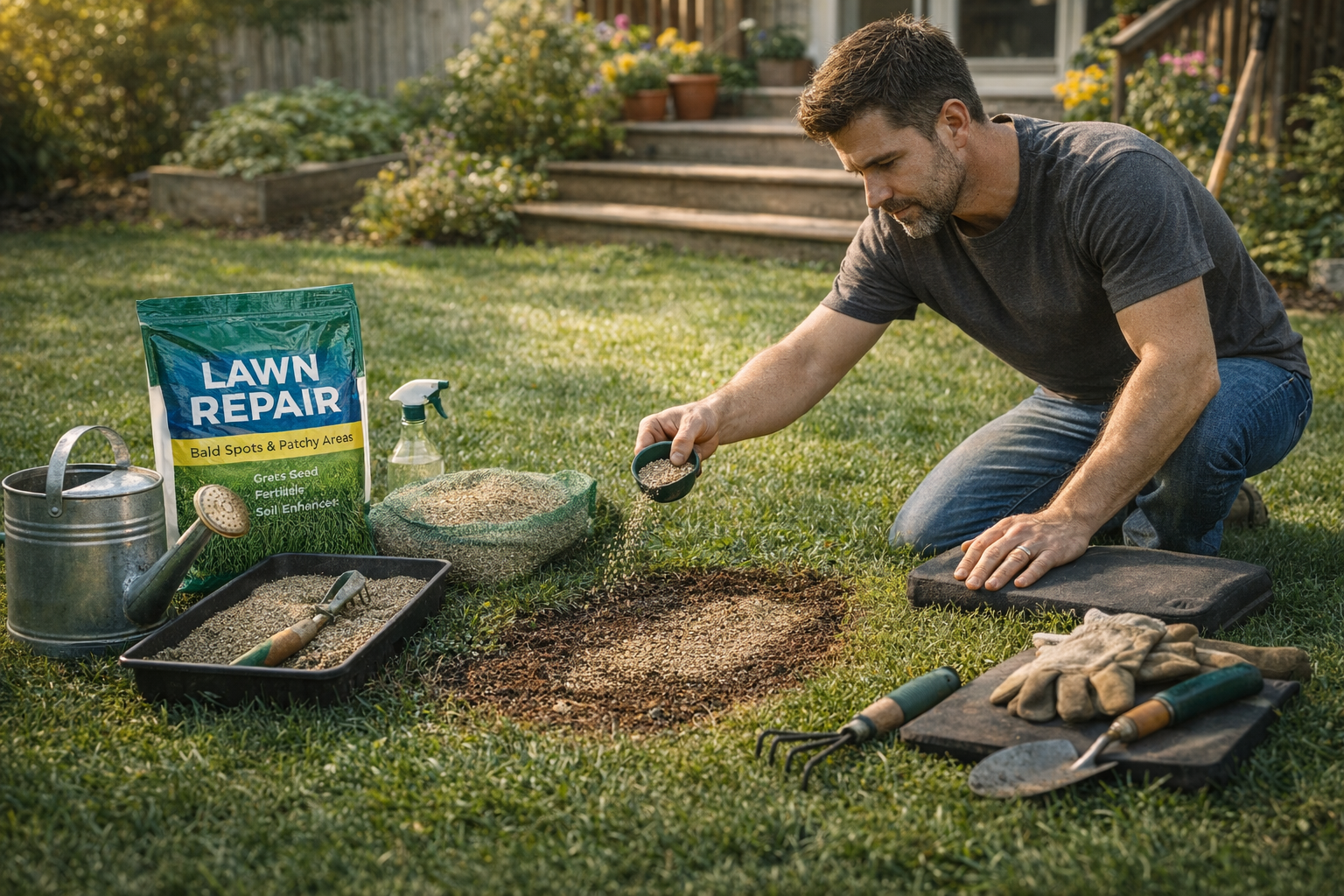
Every dad has that one spot. Maybe it’s where the kids cut across the corner every single day. Maybe the dog has claimed a patch as his personal restroom. Maybe it just… died over winter and never came back. Whatever the cause, a bare spot in an otherwise decent lawn is one of those things that nags at you every time you look out the back window.
The good news: fixing bare spots is genuinely a weekend job. You don’t need to rent equipment, hire anyone, or reseed the whole lawn. You just need to do it right — and “right” means figuring out why it went bare before you throw seed at it.
Step One: Figure Out Why It’s Bare
This is the step most people skip, and it’s why the same patch dies again six months later.
Dog urine. If you have a dog, this is the first suspect. Urine burns grass due to nitrogen concentration. The telltale sign: a dead center patch with a ring of dark green grass around the edge (that’s the diluted overspray acting as fertilizer). Fix the spot, but also water the area immediately after your dog does his thing — that dilution is enough to prevent most of the damage.
Compaction and foot traffic. High-traffic areas — the path between the back door and the fence, the spot the kids use as a soccer goal — get compacted over time. Compacted soil repels water and suffocates roots. Seed won’t take in hard-packed ground no matter how much you put down.
Shade. If the bare spot is under a tree or along a fence line that blocks afternoon sun, you’re fighting a losing battle with standard turf grass. You’ll need a shade-tolerant seed mix, and even then, you may get patchy coverage. Manage expectations here.
Grubs or other pests. If the patch is dead but the soil looks loose and spongy, lift a section of the dead turf. If you find white C-shaped larvae underneath, you have a grub problem. Seeding over an active infestation is pointless — treat first, seed after.
Winter kill or ice damage. In colder climates, ice sitting on grass can suffocate it, especially in low-lying areas where water pools. This is the easiest cause to fix since the soil itself is usually fine.
Once you know why, you can fix it properly.
What You’ll Need
- Hand rake or stiff garden rake
- Garden fork or hand cultivator
- Bag of topsoil or compost (one bag handles most spots)
- Grass seed matched to your lawn type (more on this below)
- Starter fertilizer (not regular fertilizer — starter is lower in nitrogen and won’t burn new seedlings)
- Straw or seed-starting mulch
- Hose with a spray nozzle, or a sprinkler
Total cost: $20–$35 depending on how much seed you need.
The Fix, Step by Step
1. Clear the dead stuff. Rake out the dead grass, thatch, and any debris. You want bare soil exposed, not a mat of dead material for the seed to sit on top of. Be aggressive here — dead grass doesn’t decompose fast enough to help.
2. Break up the soil. Use a garden fork or hand cultivator to loosen the top two to three inches. If compaction was the cause, this is the most important step. You’re creating air pockets and a loose seed bed. For a large area, a core aerator rental is worth it. For a patch the size of a welcome mat, a fork does the job.
3. Amend the soil. Work in an inch or two of compost or topsoil. This improves drainage, adds organic matter, and gives seedlings something to grab onto. Don’t skip this if the soil looks gray or clay-heavy.
4. Choose the right seed. This matters more than people think. Using the wrong seed type gets you a patch that looks different from the rest of your lawn for years. If you still have the bag from when the lawn was seeded, use that. Otherwise, look at your existing grass: fine blades and dark green usually mean fescue or bluegrass. Coarser, lighter green blades in warm climates are often bermuda or zoysia. Most garden centers carry regional mixes — ask if you’re unsure.
5. Spread seed and starter fertilizer. Scatter seed at roughly double the rate you’d use for new lawn seeding — you want good coverage. Then work it gently into the top quarter inch with the back of a rake. Apply starter fertilizer per the bag directions. Don’t over-apply fertilizer here; it’ll burn seedlings before they establish.
6. Cover lightly. A thin layer of straw or seed-starting mulch (not bark mulch — too heavy) keeps the seed moist and protected from birds. You want to see soil through the cover, not a solid blanket.
7. Water consistently. This is where most people fail. For the first two weeks, the seed bed needs to stay consistently moist — not soaked, not dry. That usually means light watering once or twice a day. After two weeks you can back off to every other day. Once the grass is an inch tall, switch to normal deep-watering habits.
What to Expect
You’ll see germination in 7–21 days depending on seed type and temperature. Cool-season grasses (fescue, bluegrass) germinate faster in 50–65°F soil — which makes early spring and early fall the ideal windows. Warm-season grasses prefer soil temps above 65°F.
Don’t mow the new patch until it reaches about three inches tall. When you do mow, raise your deck height slightly so you’re not scalping fresh growth.
One More Thing
If the same patch keeps dying no matter what you do, the soil or drainage there is probably the real issue. A bag of seed isn’t going to fix a low spot that holds standing water or a root system from a nearby tree that’s sucking up all the moisture. At that point, you’re looking at regrading, adding drainage, or accepting that a ground cover other than grass might be the right answer for that spot.
But for most bare spots? Rake, loosen, seed, water. You’ll have it filled in before anyone notices.

Written by
Chris Bysocki
Dad of two (a 6-year-old daughter and a 3-year-old son), homeowner, and guy who learns most things the hard way. Writing about parenting, tools, yard work, and gear from a neighborhood in the real world.
More in this category
Ask Chris
Got a question about this topic — or anything dad-related? Send it over. I read every one.