
Car Emergency Kit: What You Actually Need
Most car emergency kits are either useless gift-set junk or overkill survivalist loadouts. Here's the practical middle ground every dad should have.
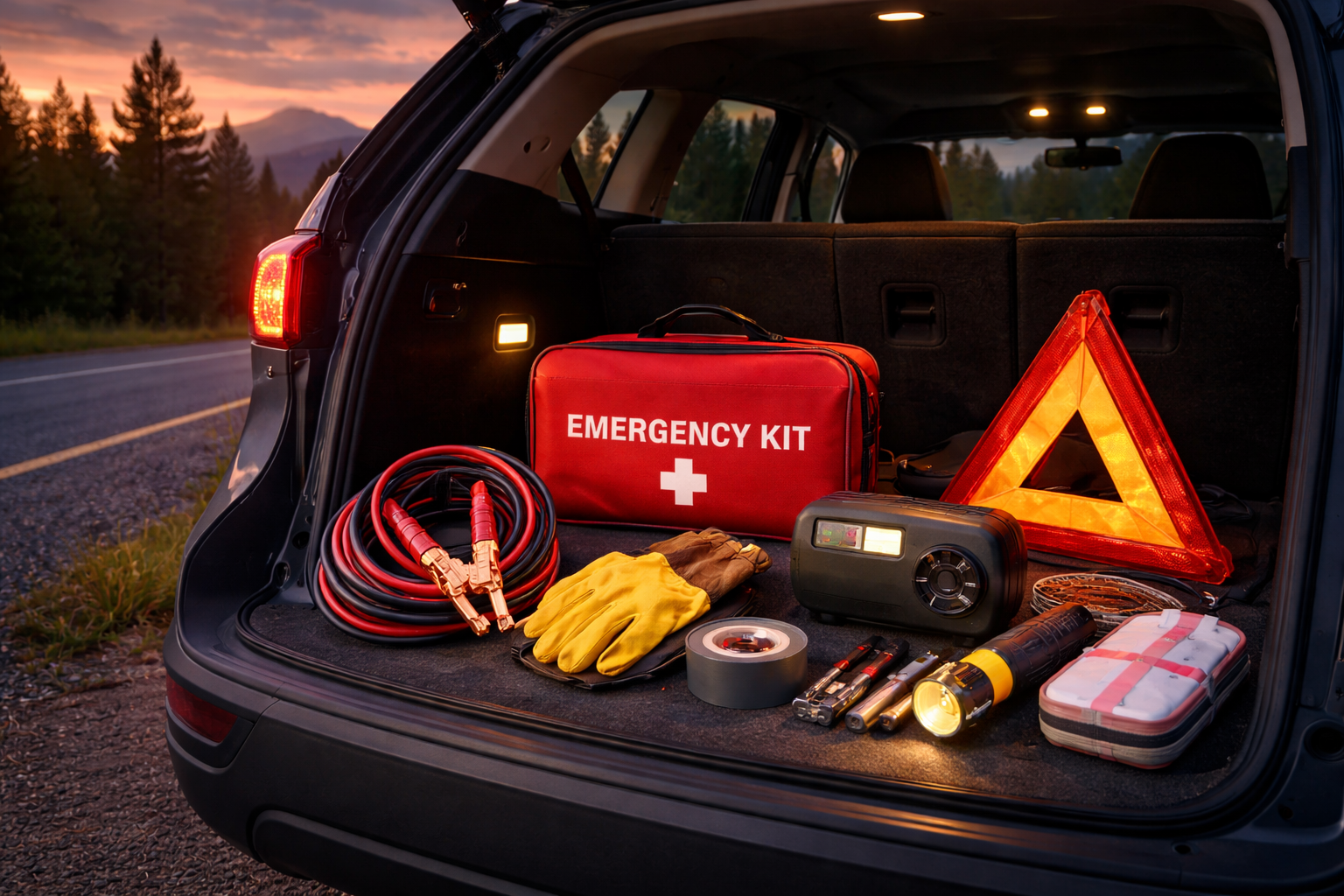
I used to have a store-bought emergency kit in my trunk. It had a foil blanket, a plastic whistle, and a bandage that had been in there since 2017. I felt prepared. I was not prepared.
After actually thinking it through — and after one night stranded in a parking lot with a dead battery and two tired kids in the backseat — I built a real kit. Here’s what’s in it and why.
A Portable Jump Starter (Not Just Jumper Cables)
A dead battery is the single most common roadside problem. AAA handles roughly 7 million battery-related calls every year, and that number spikes in winter when cold temperatures cut battery capacity nearly in half.
Jumper cables are fine, but they require a second car — which means flagging down a stranger at 10pm. A portable lithium jump starter works alone, in a parking lot, in the rain. Modern units are the size of a thick paperback, have reverse-polarity protection so you can’t connect them wrong, and double as a USB power bank.
What to look for: at minimum 1,000 peak amps for a 4- or 6-cylinder engine; 1,500–2,000A if you drive a truck or large SUV. The NOCO Boost Plus GB40 ($100) handles most family vehicles. The Hulkman Alpha 85S ($130) is a step up with faster recharging. Recharge the pack every 3–6 months so it’s ready when you need it — lithium batteries self-discharge over time.
Keep a set of jumper cables too. They never need charging and will outlast every other item in the kit.
Tire Gear: More Than One Tool
Flat tires are a close second behind battery failures. Here’s the thing: you need more than one solution because different tire problems require different responses.
Portable air compressor. A 12V compressor that plugs into your cigarette lighter handles the majority of tire situations — slow leaks, gradual pressure loss, tires that go soft overnight. Look for one rated to at least 150 PSI with a digital gauge and auto shut-off. A fully flat tire takes 10–15 minutes to inflate; cheap units overheat, so check for a duty cycle rating of at least 15 continuous minutes. The AstroAI 150 PSI (~$30) is a solid budget pick.
Fix-a-Flat: know what it can and can’t do. It works on small tread punctures only — nothing on the sidewall, nothing larger than about 4mm. The bigger issue is that the foam can clog your TPMS sensors (those are $50–$150 each to replace) and makes the tire unrepairable at most shops. It’s a last resort, not a first move. A plug kit ($10–$15) is a better tool — it’s a real repair, doesn’t damage sensors, and takes about five minutes to learn.
Check your spare. If you have a donut spare, it’s limited to 50 mph and 50–70 miles. Check the pressure every 6 months — spare tires go flat sitting in the trunk just like regular ones. Most donuts should be at 60 PSI.
Road Visibility: Flares or LED Discs
Pulling over on the side of a highway is genuinely dangerous. You need something that makes your car obvious to oncoming traffic — especially at night, in rain, or in fog.
Traditional flares work, but they burn hot, emit fumes, and are single-use. For a family car, a 3-pack of LED road flares is the smarter option. They’re reusable, waterproof, safe around kids, and visible up to a mile. Look for magnetic bases so they stick to your car. A set runs $25–$40 and lasts for years.
Position them at 10, 100, and 300 feet behind the vehicle — that’s the NHTSA recommendation. A pack of reflective triangles is a good backup since they need no batteries.
A Real First Aid Kit
Not the foil-blanket kit from the gift shop. A proper kit with bandages in multiple sizes, gauze pads, medical tape, antiseptic wipes, nitrile gloves, and an instant cold compress. Add any medications your kids might need — age-appropriate pain reliever, any prescription meds, allergy treatment if that’s a concern for your family.
If you have young kids, include a few extras: extra diapers, wipes, and a spare outfit per child. A roadside stop with an infant and no supplies is its own category of miserable.
The Kid Item Most Dads Don’t Think About
Put an emergency contact card on every car seat.
If you’re ever in a crash and incapacitated, first responders need to know your child’s name, date of birth, medical conditions, medications, blood type if known, and emergency contacts. They can’t get that from a phone with a lock screen. A laminated card taped to the car seat frame or a purpose-made tag like the ROTH ID tag (~$15) gives them everything they need instantly.
EMTs and firefighters actively recommend this. It takes 10 minutes to set up.
Water, Snacks, and a Charger
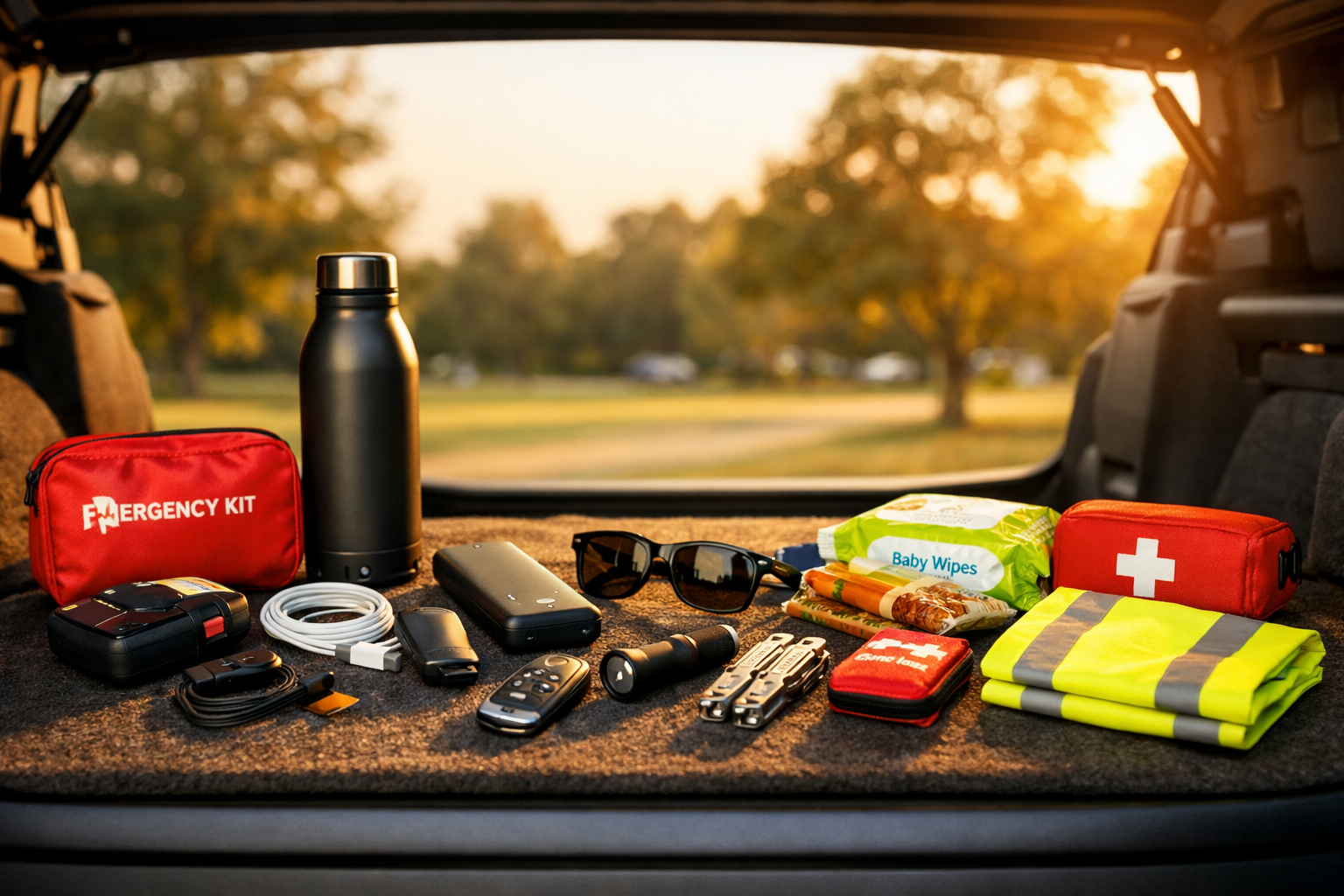
Two bottles of water and a few non-perishable snacks — granola bars, trail mix, peanut butter crackers. If you’ve ever been stuck in stopped traffic for two hours with a hungry five-year-old, you don’t need me to explain why this is on the list.
A car charger plus a small power bank covers your phone. Your phone is your navigation, your roadside assistance contact, and your communication — keep it alive.
The Stuff People Forget
A few items that rarely show up on basic lists but are worth having:
- Seatbelt cutter / window breaker combo — In a crash with a jammed belt or a door that won’t open, this is life-safety gear. The ResQMe keychain tool is $10 and mounts within reach of the driver seat.
- Tow strap — If you slide off the road, a jack doesn’t help. A 20,000 lb nylon strap ($15–$25) lets another driver pull you out.
- Duct tape and zip ties — Fix a loose bumper, secure a heat shield that’s dragging, patch a cracked trim piece long enough to get home.
- Rain poncho per adult — Changing a tire in street clothes in a downpour is the kind of misery that stays with you.
- Cash — $20–$40 in small bills. Sometimes you just need it.
Check It Twice a Year
The kit does nothing if the jump starter is dead and the first aid supplies are expired. Tie your check to the clock changes — spring forward and fall back. At each check: recharge the jump pack, test the flashlight, replace anything expired or used, verify your spare tire pressure. Swap cold weather items (hand warmers, an extra fleece layer, ice scraper) in before November.
Fifteen minutes of assembly and a twice-yearly checkup. Potentially invaluable — especially with kids in the car.

Written by
Chris Bysocki
Dad of two (a 6-year-old daughter and a 3-year-old son), homeowner, and guy who learns most things the hard way. Writing about parenting, tools, yard work, and gear from a neighborhood in the real world.
More in this category

Ask Chris
Got a question about this topic — or anything dad-related? Send it over. I read every one.